/cdn.vox-cdn.com/uploads/chorus_asset/file/22142568/Artboard_1_copy_80.jpg)
- Release date: November 13, 2020
- Director: David Fincher
- Starring: Gary Oldman, Amanda Seyfried, Lily Collins, Arliss Howard, Tom Pelphrey, Charles Dance
- Genre: Biography, Drama
- Star rating: 7.75/10
The dichotomy of current, post-modern cinema and Classic Hollywood filmography is as stark as the monochrome imagery that people may find swift identification with the latter. Preferences morph in direct proportion with the evolution of motion pictures. Yet older generations find gladness in a niche of younger generations that still fascinate old-school filmmaking. But the intrigue for Hollywood’s Golden Age goes far beyond its feature presentations; it extends as well to the events that unfolded behind the scenes.
Take the Finchers’ word for it. Quite likely, Jack Fincher and his son David adulate Citizen Kane (1940) and the contextual inspirations behind it with much passion. You could easily see it in their latest work Mank (2020), serving not only an introspective look into the views of its titular subject character but also an exposé of the Los Angelean artifice.
From a more personal perspective, Mank is more than a tribute to the Hollywood of the past. It is the long-overdue fulfillment of his late father’s wishes, and it could not come in better timing. With the benefit of retroactive appreciation and antique technology, David Fincher executes his vision of a bygone movie style. Everything from the visual design of the vintage Californian epoch down to the visual aesthetic cinematography of RED cameras replicates the 1930s-inspired mode of filmmaking with not an iota of incongruity or anachronism.
Aiding this direction further are acting performances that reminisce the period’s more theatrical type of acting that frankly never goes out of style.
Gary Oldman’s penchant for transformation proves essential for the role of the well-versed yet dipsomaniacal Herman Mankiewicz, having able to provoke his privileged colleagues with subtle hilarity and without campy histrionics.
Amanda Seyfried provides a more refreshing and faithful depiction of comedienne Marion Davies, one with more elegance and graceful intelligence mixed with hints of poignant submission to a patriarchal Hollywood system.
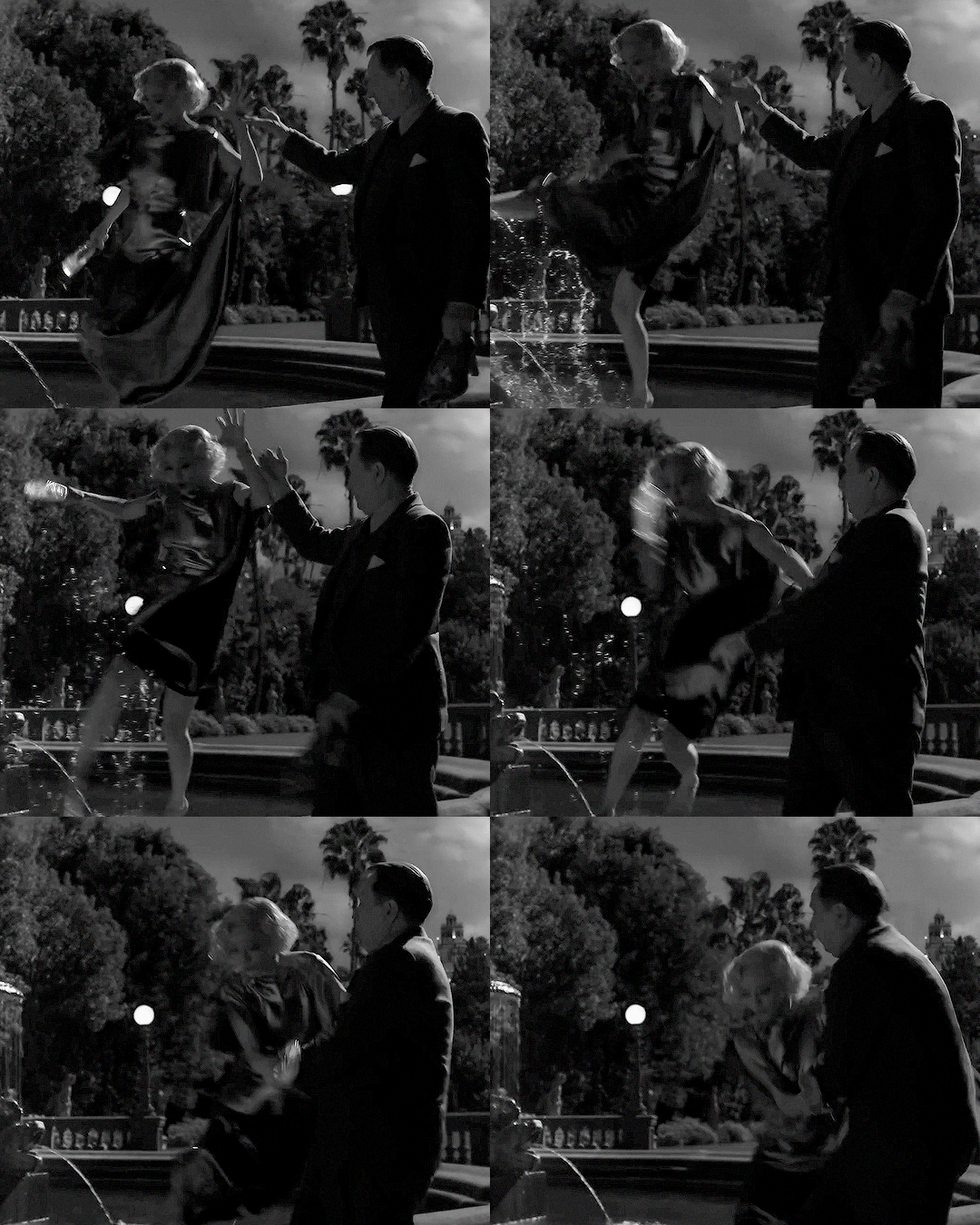
However, by the time you have reached the halfway point of this film, you might be bombarded with the following questions.
Who is Herman Mankiewicz?
Who is Marion Davies?
Who is Orson Wells? (God forbid if you are not even familiar with this name!)
And therein lies the film’s hurdle to relay its narrative to its audiences. To watch this film blind and unknowing is akin to entering class unprepared for the final examination. Prior knowledge and contextualization are prerequisites. Otherwise, the film alienates, and you will feel underwhelmed by what it offers.
But in fairness to its storytelling, it at least tries to explain the zeitgeist of Depression-era California, albeit in a hit-or-miss manner, like a man’s countless attempts to aim for the bullseye of a dartboard. At times, you might grasp the general gist of it all, but conversely, when it delves into specific references, you are left lost and confused.
But where it may fail to educate, it may succeed in arousing curiosity on its subject matter. Tomes and documentaries await to feed and satisfy that inquiring mind.
Fincher probably aimed for Mank to be a knowledgeable gateway into the politics and economics of American entertainment. If so, he succeeds in certain aspects, shortcomings and all.
“You cannot capture a man’s entire life in two hours. All you can hope is to leave the impression of one.”
Herman Mankiewicz





































 JMC - The Filmy Stan